

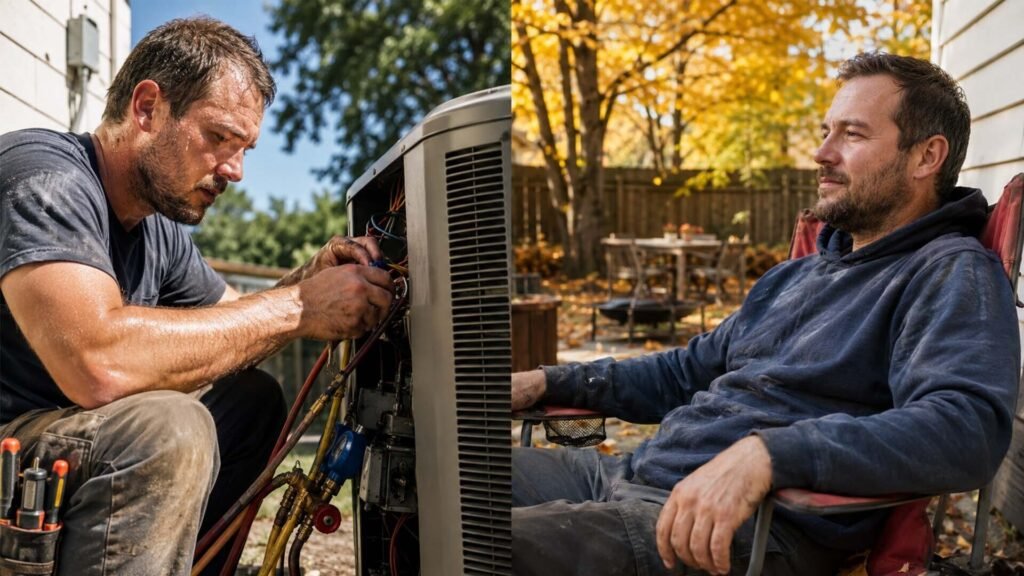
July, your phones do not stop. Techs are booked solid, you are turning work away, and marketing feels like a solved problem.
October arrives. The calls thin out. Suddenly someone suggests running some ads.
That swing is the core problem with HVAC marketing, and it is why so many contractors feel like their marketing works some months and fails others. HVAC marketing is not really failing here. It is only ever switched on when demand is already high, which is the least valuable time to be spending.
Why HVAC Is Not Like Other Local Services

A dentist gets a fairly steady stream of patients all year. A plumber sees spikes but nothing dramatic. HVAC lives and dies by weather.
That creates 3 things no other trade deals with in the same way.
- Demand arrives in waves you cannot control. A mild summer can cost you a quarter.
- Urgency is extreme at the peak. When the air conditioning fails in August, nobody is comparing 5 companies. They call whoever answers first.
- And the biggest money does not come from those emergency calls at all. It comes from system replacements and maintenance agreements, which people decide on slowly, usually when nothing is broken.
HVAC marketing strategies built only for the emergency moment miss where the profit actually is.
The Peak Season Trap
Here is what most contractors do. Summer hits, competition floods Google Ads, cost per click doubles, and everyone bids against each other for the same panicked homeowner.
Your HVAC lead generation costs peak at the exact moment you are least able to service the work well.
Meanwhile, the homeowner whose 14 year old unit is limping along, the one who will spend 8,000 dollars on a replacement in March, gets no attention from anyone.
Better approach: treat HVAC lead generation as a year round activity. Spend in the peak to capture urgent demand, and spend in the quiet months to build the pipeline. Off season clicks are cheaper, competition is lighter, and the people searching then are researching rather than panicking. That is when you win the big jobs.
Two Customers, Two Completely Different Jobs

Almost every HVAC advertising problem comes from treating these as one audience, and most HVAC advertising ideas fail for exactly that reason.
The Emergency Customer
The emergency customer has no heat or no cooling right now. They are on a phone, they will call the first credible result, and they decide in under 2 minutes. What wins them: showing up in the map pack, a site that loads instantly, a phone number visible without scrolling, and somebody who actually answers.
The Replacement Customer
The replacement customer knows their system is aging. They are reading about efficiency ratings, comparing brands, and getting 3 quotes over several weeks. What wins them: real content that answers their questions, financing information, clear pricing guidance, and proof you have done this work before.
Same company, same services, entirely different HVAC digital marketing. Most HVAC websites are built for neither, or vaguely for both, which is why they convert poorly.
HVAC Marketing Strategies for Steady, Year-Round Revenue
Maintenance agreements are the closest thing to insulation from the weather. Recurring revenue, predictable scheduling in slow months, and a customer base that calls you first when something bigger fails.
Yet most contractors barely promote them. They mention plans on an inside page and hope someone notices.
Give them a proper page. Explain what is included in plain terms. Push them in shoulder seasons, spring and autumn, when homeowners are thinking about the season ahead. Offer them to every customer at the end of a service call, and follow up by text if they say no the first time.
One more thing worth doing. Your existing customer list is the cheapest marketing asset you own and almost nobody uses it. A seasonal reminder to past customers costs close to nothing and books work that would otherwise go to a competitor.
HVAC Advertising Ideas That Suit the Cycle

Peak Season
Paid search on emergency terms, aggressive local visibility, fast response systems.
Shoulder Season
Maintenance plan promotions, tune up offers, and content aimed at people whose systems are getting old.
Off Season
Replacement and financing content, reviews collection, email and text campaigns to past customers, and building the search visibility that will pay off next peak.
The best HVAC advertising ideas are not clever, they are well timed. The point is not to spend the same amount every month. It is to always be spending on something appropriate to where your customers are in the cycle.
What to Fix Before You Spend More on HVAC Marketing
Before you change anything else, check the boring things.
Phone Answering
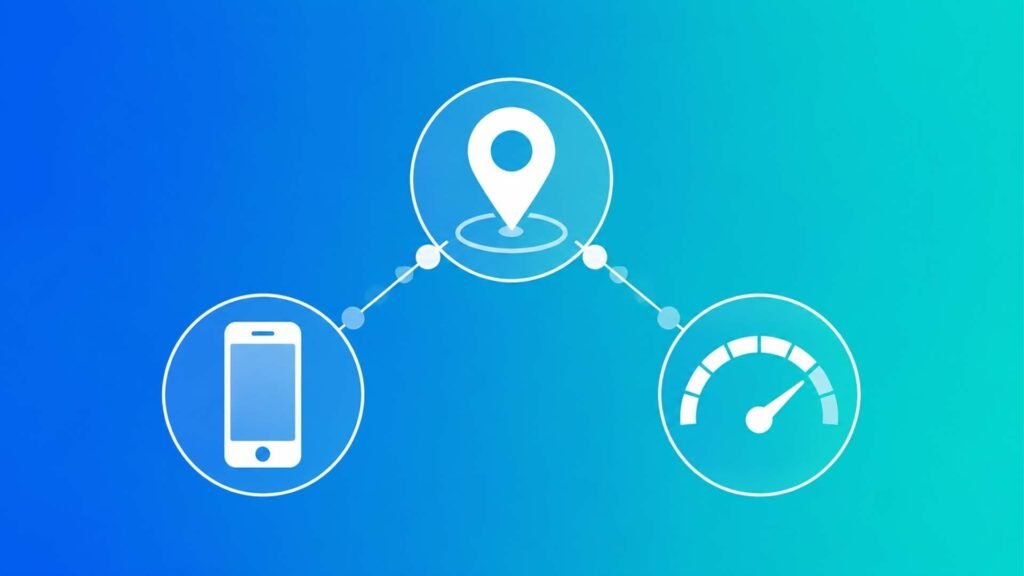
Does someone answer the phone during peak hours, and what happens to calls that do not get picked up? Answering machines lose jobs.
Google Business Profile
Most budgets get spent before these are fixed. Is your Google Business Profile complete, with current hours, service areas, and recent reviews? For emergency searches it matters more than your website.
Mobile Site Speed
Does your site load fast on a phone, and can someone call you from it in one tap?
Fixing those usually returns more than doubling an ad budget, and it makes every other channel work harder. Then look at building demand in the months when nobody else is trying.
If you would rather have someone map this against your own numbers, that is the kind of work our HVAC digital marketing is built around. No pitch, just a straight look at where the seasonal gaps are costing you.