


Thirty new patients a month is the average for a general practice. The top 10% of practices see 81.
That gap looks like an advertising budget. It often is something else.
The same data shows the average practice accepts 42% of the treatment it presents. The top 10% accept 75%. Two practices can attract identical interest and end the month with very different schedules.
So the honest answer to how to get more dental patients starts with the interest you already have.
Count What Arrives Before You Buy More
Before asking how to get more dental patients, pull last month’s numbers. New patient calls, website forms, messages, and walk ins.
Dental patient acquisition strategies start here. Count what happened to each one. Booked, never reached, booked and cancelled, or no record at all.
Many practices find the last category larger than expected. Those are handoffs that never happened, and dental practice marketing strategies seldom look at them.
Start here, because every inquiry you recover costs nothing to attract.
Four Leaks That Cost More Than Ads

The Call Nobody Answered
Your front desk is with a patient, and the phone rings out. The caller does not leave a message and does not call back. The call nobody answered is the most common leak, and the easiest to close.
The Question That Went Unanswered
Someone asks whether you take their plan. The answer arrives the next afternoon, long after they booked elsewhere.
The Booking That Was Never Offered
A new patient calls, asks about a cleaning, and hangs up with information but no appointment. Nobody offered a time.
The Treatment That Was Never Scheduled
A patient agrees to a crown in the chair, leaves without a date, and the plan sits in the software.
Fixing these four is the cheapest answer to how to get more dental patients, because they were already yours.
Where New Patients Actually Come From
Three sources bring new patients to a local practice, and two of them cost nothing per patient.
Search and the map pack. Someone looks for a dentist nearby and picks from the first three results.
Patients you already have. Referrals from people who trust you, and family members of current patients.
Reviews. What other patients wrote decides whether a stranger calls you or the practice next door.
Paid campaigns sit on top of these three. They are the fastest way to get more dental patients and the only one that stops when you stop paying.
Strong dental patient acquisition strategies build the first three, then use paid to fill the gaps.
Make It Easy to Say Yes
Once someone finds you, three things decide whether they book.
Whether they can see your insurance plans without calling.
Whether they can book without waiting on hold.
Whether anyone answers at the hour they are free, which for working patients means evenings.
Dental practice marketing strategies can skip past insurance, and it is the biggest of the three. It is the top challenge dentists named for 2026, at 55.3%, and patients feel it before they ever sit down.
Dental patient acquisition strategies that ignore these three pay to bring people to a locked door.
When Paid Campaigns Make Sense
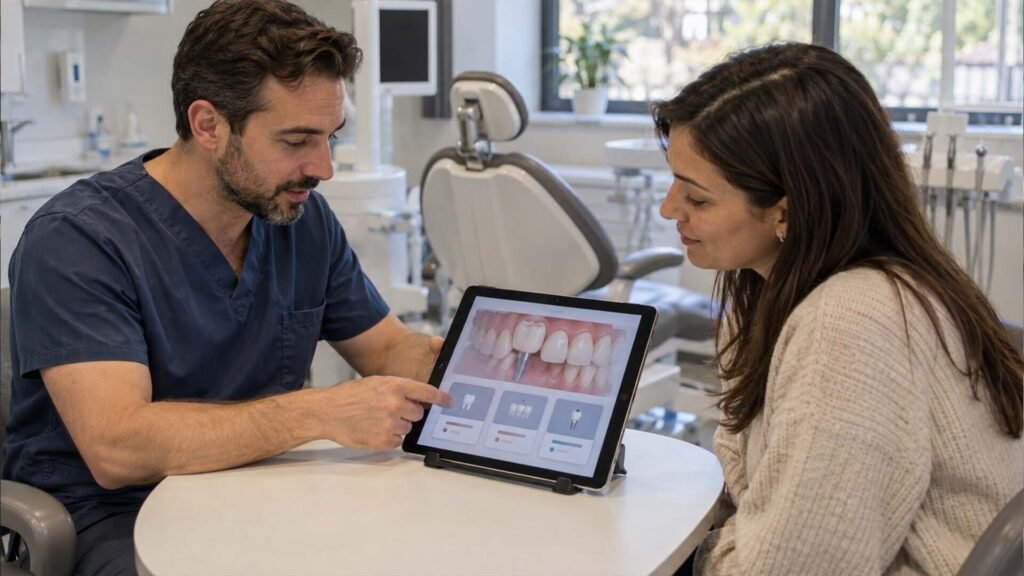
Paid advertising belongs in the mix when the schedule has room and the front desk can handle more volume.
Dental marketing campaigns work best aimed at a single treatment with a clear decision. Implants, Invisalign, and cosmetic cases suit this, because people research them and compare practices.
General dentistry campaigns are harder. The searcher may want an emergency, a cleaning, or a second opinion, and one ad cannot serve all three.
Whatever you run, send the click to a page about that treatment. Dental marketing campaigns waste money mostly in the gap between the ad and the homepage.
Say Yes to the Treatment in Front of You
Case acceptance is where the 42% and the 75% separate, and it answers how to get more dental patients from the chairs you already fill.
A patient who hears a number without understanding the problem says they will think about it. A patient who sees the image, hears the consequence of waiting, and gets a monthly figure makes a decision.
Three things move it, and each one is a way to get more dental patients from the same chairs. Show the problem rather than describing it. Present options with costs. Offer financing before the patient asks.
Then follow up. A plan declined in March can be accepted in September, once circumstances change.
The Order to Work In

Answer and book what already arrives. That is how to get more dental patients this week.
Fix insurance information, online booking, and after-hours handling.
Ask every happy patient for a review, every month. Dental practice growth strategies compound from reviews.
Then add paid campaigns, aimed at one treatment at a time.
Dental practice growth strategies fail when they start at the bottom of that list.